ᴀ ᴄᴏɴᴛᴇᴍᴘᴏʀᴀʀʏ ᴍɪxᴇᴅ-ᴜꜱᴇ ʟᴀɴᴅᴍᴀʀᴋ ɪɴ ʙᴜᴇᴀ
ᴠɪꜱɪᴏɴ & ᴜʀʙᴀɴ ɪᴍᴘᴀᴄᴛ
Ekenja Tower is a bold mid-rise mixed-use development strategically positioned within the evolving urban fabric of Buea. Conceived as both an architectural statement and a commercial asset, the project responds to the increasing demand for vertically integrated developments that combine residential, hospitality, and retail functions within a single, cohesive structure.
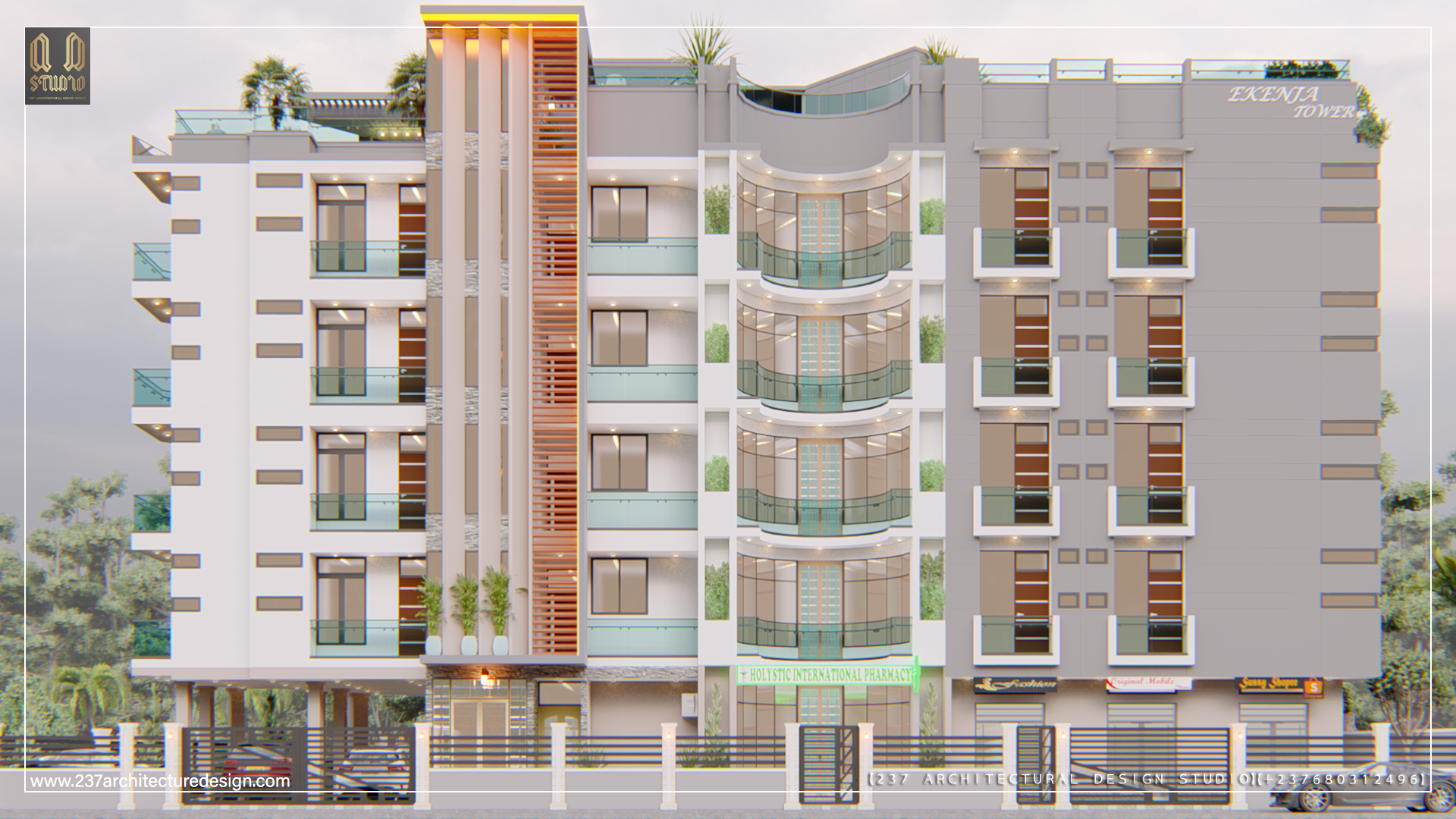
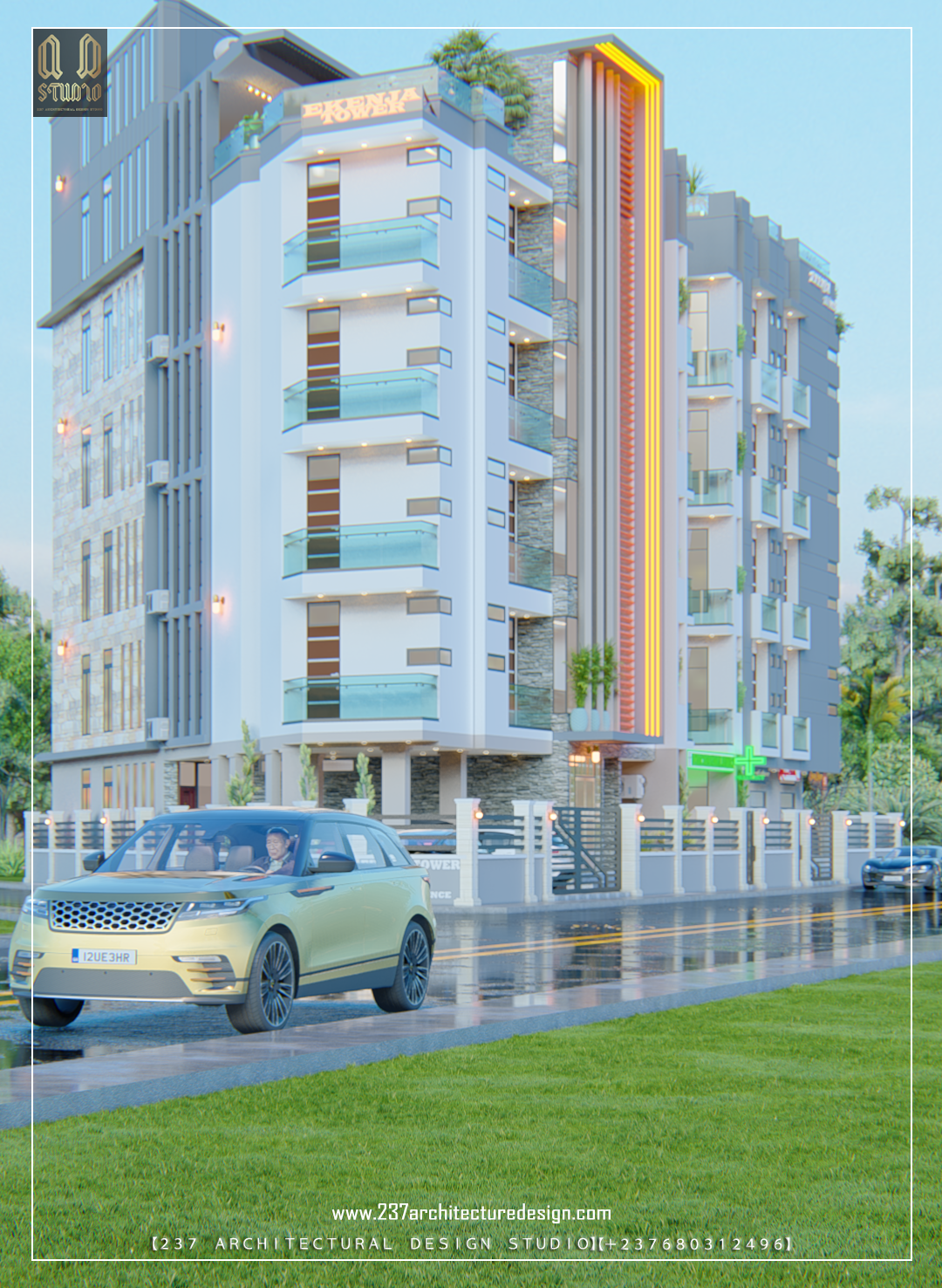
Rising confidently above its surroundings, the tower establishes a strong urban identity through clean vertical lines, articulated façade treatments, and a carefully balanced interplay of textures and materials. The illuminated vertical feature element serves not only as a visual anchor but as a branding spine — reinforcing the building’s presence both day and night.
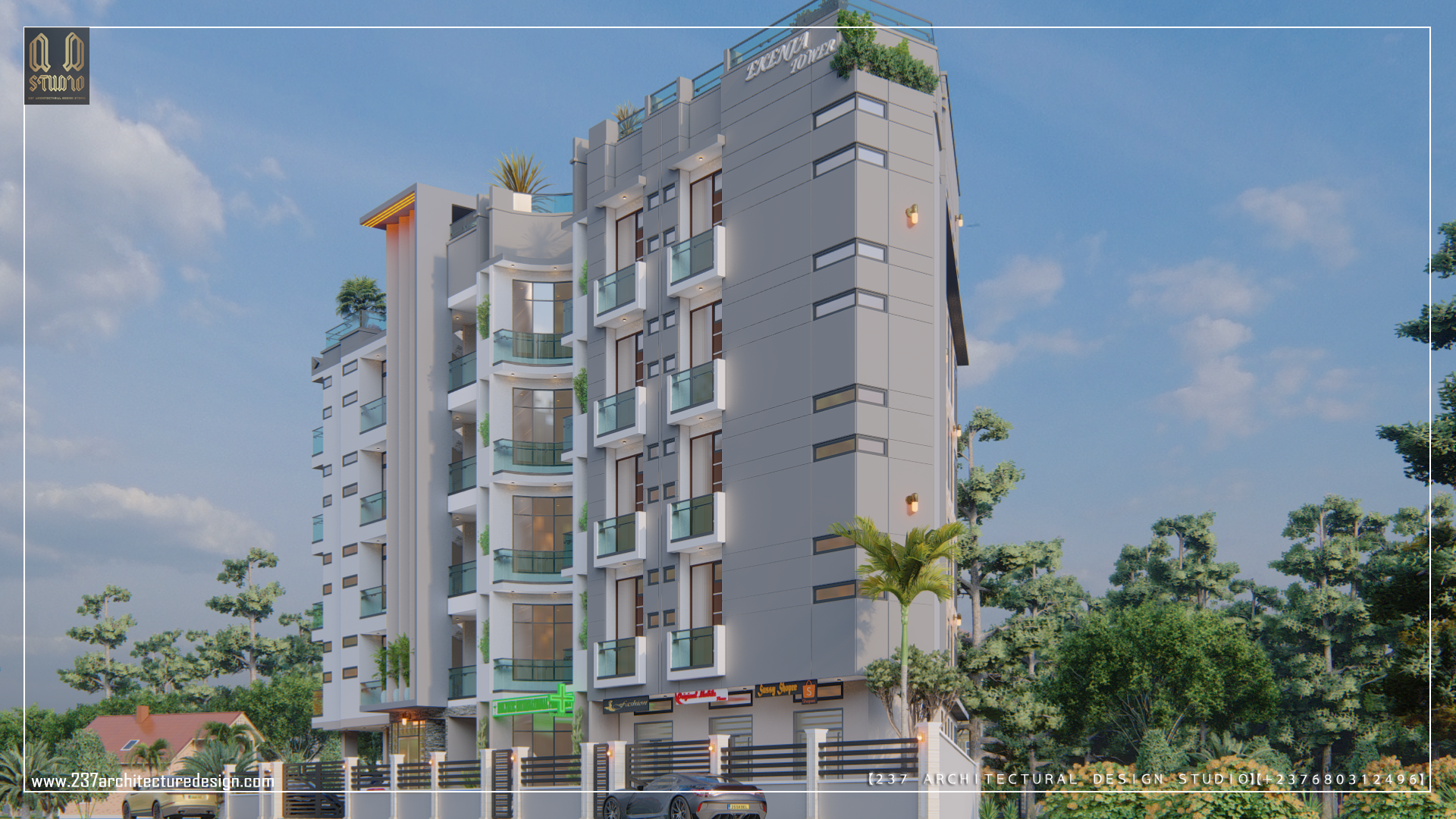
At ground level, the design prioritizes permeability and commercial visibility. Retail units activate the street frontage, encouraging pedestrian interaction and strengthening the project’s economic viability. The tower therefore functions not only as a building, but as an urban catalyst — contributing to the modernization of Buea’s architectural landscape.
Ekenja Tower reflects our commitment to delivering developments that are architecturally distinctive while remaining commercially intelligent.
ᴀʀᴄʜɪᴛᴇᴄᴛᴜʀᴀʟ ᴇxᴘʀᴇꜱꜱɪᴏɴ & ꜱᴘᴀᴛɪᴀʟ ꜱᴛʀᴀᴛᴇɢʏ
The architectural language of Ekenja Tower is contemporary, disciplined, and refined. The façade composition integrates layered balconies, glazed balustrades, vertical fins, and textured stone cladding to create rhythm and depth. The interplay of solid and void enhances visual dynamism while ensuring functional shading and environmental performance.
The central curved balcony feature introduces softness within a predominantly rectilinear framework, balancing strength with elegance. This sculptural gesture enhances both aesthetic value and user experience, offering expansive views and increased natural ventilation.
Spatial planning was guided by three core principles:
Efficiency of circulation
Maximization of rentable and usable floor area
Long-term operational flexibility
Vertical circulation cores are strategically positioned to optimize structural logic and service distribution. Retail spaces at ground level are clearly defined for commercial visibility, while upper floors benefit from privacy, light, and cross ventilation.
Material selection was driven by durability, maintenance efficiency, and contemporary appeal — key considerations for investors seeking long-term asset performance.
ɪɴᴠᴇꜱᴛᴍᴇɴᴛ ɪɴᴛᴇʟʟɪɢᴇɴᴄᴇ & ᴅᴇᴠᴇʟᴏᴘᴍᴇɴᴛ ᴠᴀʟᴜᴇ
Ekenja Tower was designed not only as architecture, but as a sustainable investment instrument.
The integration of commercial units at the base ensures immediate revenue activation, while upper-level accommodations provide recurring income potential. This hybrid programming strengthens financial resilience and enhances long-term return on investment.
Key development strengths include:
Strong street-facing commercial presence
High visual identity and branding potential
Efficient structural grid for cost control
Contemporary appeal aligned with diaspora and international standards
Scalable model for replication in emerging urban centers
By balancing architectural quality with financial strategy, Ekenja Tower demonstrates how thoughtful design directly enhances asset value.
For international investors, the project signals growing sophistication within Cameroon’s built environment. For local developers, it represents a benchmark for integrated mid-rise development in secondary urban centers.
ᴘʀᴏᴊᴇᴄᴛ ᴏᴠᴇʀᴠɪᴇᴡ
Location: Buea, Cameroon
Development Type: Mixed-Use Mid-Rise
Components: Retail Units + Residential / Hospitality Floors
Architect: 237 Architectural Design Studio
Status: Under construction
Ekenja Tower reflects our broader mission at 237 Architectural Design Studio — to elevate the standard of contemporary development in Central Africa through disciplined design thinking, technical rigor, and commercially intelligent architecture.
Project information
- Project Date 20 February, 2026
- Back to Projects